Quick answer (TL;DR)
Dahlonega became Georgia’s wine country the way it became anything: by geography and stubbornness. Mountain altitude cools the nights and stretches the ripening season, the Dahlonega Plateau holds a federally recognized wine appellation, and a tasting-room culture grew around the views. The gold town traded one glitter for another and found the second one aged better.
Dahlonega’s wine country grew from mountain altitude, a recognized appellation on the plateau, and a culture that likes a view with its glass.
A gold town turns to grapes
Dahlonega has reinvented itself twice. The first fortune came out of the ground in the late 1820s, and when it played out, the town settled into being the county seat, a college town, a stop on the way through the wider North Georgia mountain towns country. The second reinvention was slower and quieter. Somebody looked at these same ridges and saw something in them besides gold. They saw farmland for grapes.
There is a neat symmetry in it. The hills that delivered America’s first gold fever now deliver something you can plant on purpose, harvest on a schedule, and improve with patience. A strike plays out; a vineyard does not. Land farmed well keeps producing, the vines settle in deeper every year, and the payoff compounds instead of vanishing. For a town built on a boom, that is a genuinely different kind of wealth.
Why altitude makes the difference
Ask anyone who grows wine grapes in the Georgia mountains why here, and the answer starts with elevation and ends with stubbornness. The classic wine grapes of Europe struggle in the Deep South’s lowland heat, which cooks the freshness out of a season. Get up the ridges and the deal changes: afternoons stay warm enough to ripen the fruit, nights cool down enough to let it rest, and that day-night swing is what keeps acidity in the glass. Slope does its part too, draining cold air downhill away from the vines while the hillside tilts toward the sun.
Georgia built its farm reputation on flat coastal plain and piedmont, peaches and peanuts and pines, but the mountains were always a different kind of farm. What the altitude does for grapes, it also does for the people drinking them: the same cooling that makes the fruit possible makes a mountain porch in the evening one of the small perfections of Southern life.
An appellation puts it on the map
Wine regions become official when the federal government agrees to draw a line around them, and the Dahlonega Plateau, the elevated country around the town, holds that kind of recognition. It is a named American viticultural area, which is the country’s formal way of saying that this ground grows wine with a character of its own, shaped by elevation and climate you cannot fake anywhere else.
What an appellation changes is mostly seriousness. Vineyards and tasting rooms stop being a scattered hobby and become a region, marketable as a destination, defensible as an identity. For Dahlonega, it converted a pleasant local fact into a national calling card, the way the branch mint once converted raw gold into currency. Locals enjoy that parallel more than they let on.
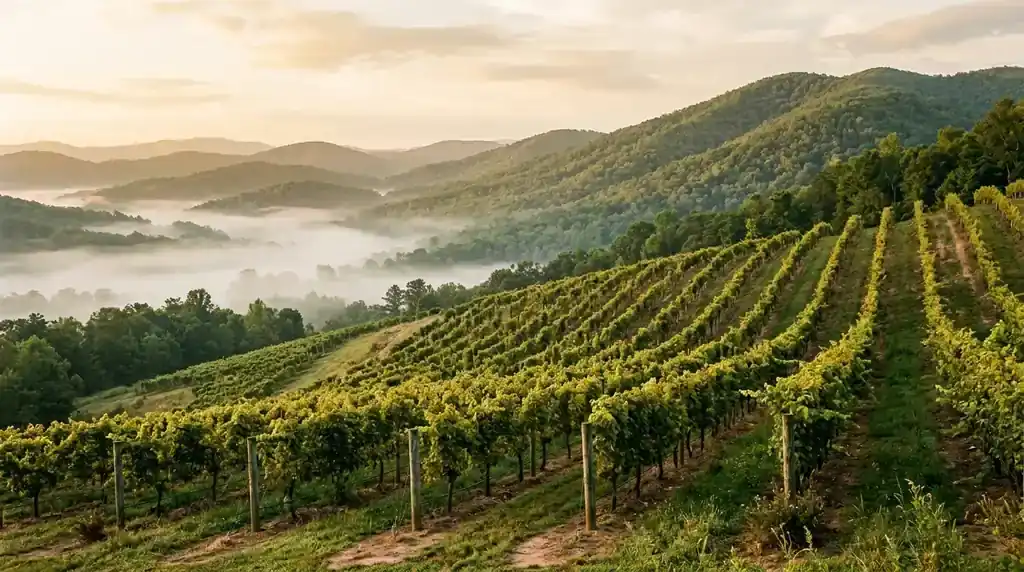
Elevation that cools the nights and tilts the vines toward the sun.
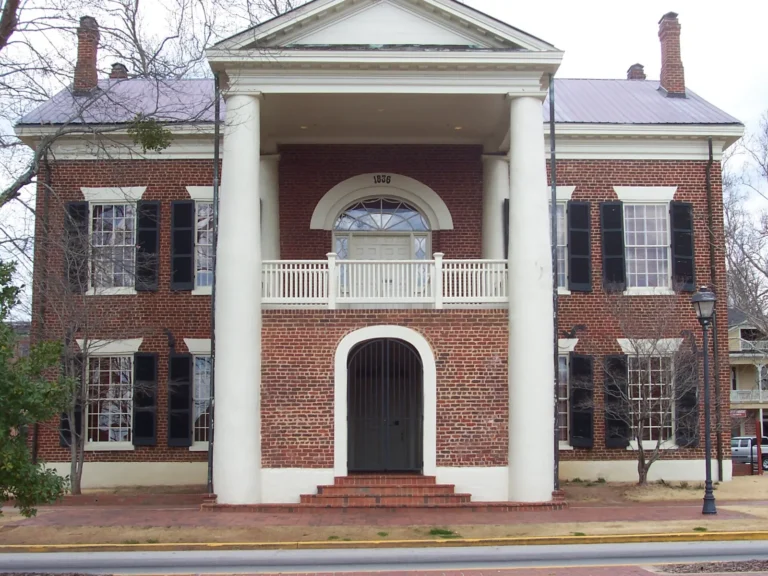
The Dahlonega Plateau, formally recognized as wine-growing ground with its own character.
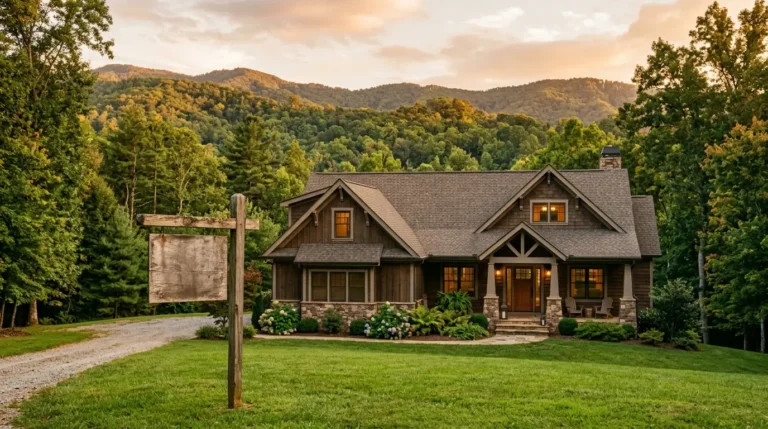
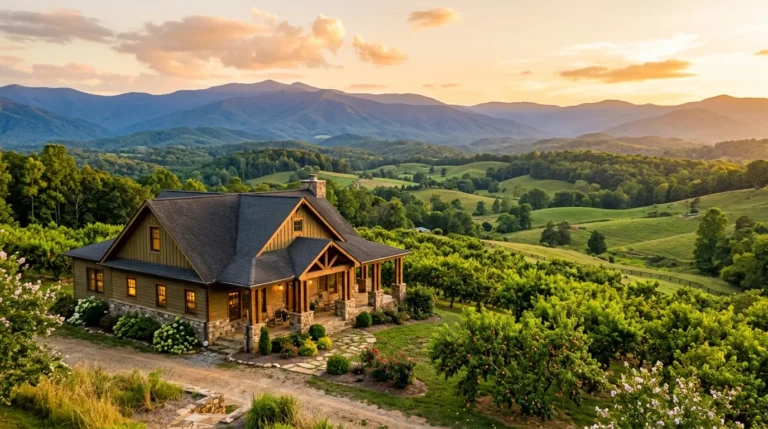
Porches, decks, and valley light, run at a pace that treats the glass as a reason to stay.
The tasting-room culture
The experience that grew up here is its own invention, not an import from somewhere older. Wine country in Dahlonega tastes like the mountains: porches and patios set above valley views, fire pits once the evenings turn, music on weekend afternoons, and a pace that treats the glass as a reason to linger rather than a transaction to finish. Nobody rushes you off a mountain deck. The scenery will not allow the hurry.
The culture reaches town as well. The public square anchors the scene, with tasting rooms and kitchens within a short walk of one another, so a wine afternoon can become a dinner evening without anyone touching a highway. That walkability is part of why the wine story and the town story keep braiding together.
None of which this page will turn into an itinerary. The visiting side of wine country, which rooms to book, which routes to drive, is its own subject. This page is about what the culture is, and what it did to the place that grew it.
What wine country did to the town
The change wine country brought is durable in a way pure visitor economies usually are not, because it is rooted. Grapes are agriculture; the land is committed; the businesses standing on it have standing reasons to steward both. Weekenders arrived first, drawn up the ridges, and over the years a share of them kept finding reasons to stay, which is how a hospitality economy slowly becomes a neighborhood. What makes Dahlonega special covers the character that receives all this; the longer arc from gold camp to wine country is told in Dahlonega then and now.
There is also a plainer version of the story. A region that once shipped its wealth away as raw metal now grows it in place, sells it with a view attached, and watches it renew every harvest. Among the mountain towns finding second acts, Dahlonega’s may be the most literal: the same hills, worked a second time, by people patient enough to wait on a plant instead of a pan.
Frequently Asked Questions
Is Dahlonega really wine country?
Yes, in the formal sense and the practical one. The Dahlonega Plateau holds federally recognized status as a wine-growing appellation, and the vineyards and tasting rooms around town back the designation up. Georgia wine country is a real region with a mountain address, not a marketing label stretched over a gift shop.
Why does altitude matter for Georgia wine?
Elevation cools the nights, and cool nights are what keep acidity and freshness in grapes grown at Southern latitude. Warm afternoons ripen the fruit; the drop after sundown lets the vine rest. Hillside slope helps as well, draining cold air away from the rows and aiming them at the sun. Together they make the mountains work for a crop the lowlands struggle with.
When did Dahlonega become wine country?
Gradually, over recent decades, which is how agricultural identities actually form. Growers proved the ground first, vineyard by vineyard, and formal appellation recognition arrived later in the arc, once the region had a defined character worth naming. Unlike the gold rush, nothing about it happened in a season.
How many wineries are there near Dahlonega?
Enough to make a region rather than a roadside attraction, and a number that keeps changing as the scene grows. This page deliberately does not print a count, because any figure quoted here would go stale before the next harvest. A current local directory will beat this article every time on that question.
What is the Dahlonega Plateau appellation?
It is the formally recognized wine-growing area centered on the elevated country around Dahlonega. The designation exists to say that grapes grown on this ground carry a character shaped by its specific elevation and climate, distinct from elsewhere. In practical terms, it is what lets a mountain town in Georgia use the vocabulary of the world’s wine regions.
What kinds of grapes grow in the North Georgia mountains?
A practical mix. Where the altitude allows, growers work with the classic European wine grapes; where Southern humidity argues back, they lean on varieties bred to stand up to it. Matching the grape to the slope is half the craft of mountain viticulture, and the region’s range reflects decades of that argument between ambition and weather.
What is the tasting-room scene like around Dahlonega?
Pace is the point. Decks and porches set above valley views, unhurried pours, live music on weekend afternoons, and fire pits once the evenings cool. The best description is cultural rather than logistical: it is wine service that assumes you came for the afternoon, because most people did.
Is Dahlonega wine country worth visiting if you don’t drink wine?
The scenery does not check your glass. Much of what the region sells is the setting it happens in: ridgelines, valley light, long views, and a town square worth the drive. Cider, food, and the mountains themselves carry the experience for plenty of visitors who never taste a pour.
How did wine country change the town of Dahlonega?
It rooted an economy that might otherwise have stayed seasonal. Vineyards committed the land to agriculture, hospitality grew around the agriculture, and the weekender traffic that funds both became steadier and more local as some visitors turned into neighbors. The town gained a second identity without surrendering its first one.
Does the wine scene affect people wanting to move to Dahlonega?
It widens the appeal, quietly. Scenery with amenities attached is a rare combination, and wine country supplies the amenities: places to eat, reasons to gather, a rhythm of seasons worth building a life around. People come up for a tasting and leave wondering about a mortgage, which is where a conversation with a local brokerage tends to start.
Is Dahlonega’s wine story still growing?
Every sign says yes, in the literal way vines grow. The region is still planting, still adding ways for visitors and residents to spend time among the vines, and the appellation’s reputation is still being built pour by pour. The gold played out. The second act is still writing its middle.
When wine country becomes home
If the vines have you imagining a longer stay, Compare homes for sale in Dahlonega and North Georgia with Gold Peach Realty or call (770) 283-1223.