

 Illustration
North Fulton · Milton
What is Milton, Georgia like?
Milton is a city of about 41,000 people in north Fulton County, Georgia, incorporated in 2006 and shaped by horse farms, low-density residential land, and a few small commercial districts such as Crabapple and Birmingham Crossroads.
A guide to Milton's cityhood, rural land use, equestrian heritage, parks and Crabapple, with every number sourced.
When did Milton become a city, and why?
Milton became a city on December 1, 2006, after about 85 percent of voters approved a referendum to form it from unincorporated north Fulton County. It came out of the same wave of early-2000s cityhood efforts that produced Sandy Springs and Johns Creek, all carved from unincorporated Fulton County.
According to the City of Milton, some residents believed their corner of Fulton County was a low priority for decision-makers based dozens of miles away, and that desire for local control fed the cityhood movements. A bill creating the city passed the Georgia House 127 to 21 and the Senate 49 to 0 on March 9, 2006, and the governor signed HB 1470 on March 28. The first mayoral and council election was held on November 7, 2006, and at a meeting that began at midnight on December 1 the new council adopted Fulton County’s ordinances, which the city counts as its first day.
The name is older than the city. Milton honors John Milton, a Revolutionary War hero and Georgia’s first Secretary of State, who also gave his name to Milton County. That county was created in 1857 from parts of Cherokee, Forsyth and Cobb counties, with Alpharetta as its seat, and it was folded into Fulton County in the early 1930s as the Depression squeezed local budgets. The New Georgia Encyclopedia adds that Crabapple and Birmingham, two communities of that old county, remain identifiable today.
Where is Milton, and how many people live there?
Milton is in the northernmost part of Fulton County, about 26 miles from downtown Atlanta, and the 2020 Census counted 41,296 people. The city covers more than 39 square miles.
The city’s About Milton page says it borders Cherokee County to the north and west, Forsyth County to the east, Roswell to the southwest and Alpharetta to the south. The Census Bureau’s QuickFacts table gives the following counts for the city.
| Measure | Population |
|---|---|
| Census, April 1, 2010 | 32,661 |
| Census, April 1, 2020 | 41,296 |
| Estimate, July 1, 2025 | 41,266 |
The city notes that the 2010 to 2020 change was an increase of more than 26 percent, while the Census Bureau’s 2025 estimate sits slightly below the 2020 count. The figures come from the Census Bureau.
What are Crabapple and Birmingham Crossroads?
Crabapple and Birmingham Crossroads are two of Milton’s three commercial districts, the third being Deerfield along Highway 9. The city says less than 2 percent of its land is zoned for commercial use across these three areas.
Crabapple is centered on Crabapple Road. City Hall is at 2006 Heritage Walk, and Crabapple Fest starts at the roundabout where Crabapple Road meets Heritage Walk. The Crabapple Government Center is at 12624 Broadwell Road, across from Broadwell Pavilion, a picnic pavilion with a playground at 12615 Broadwell Road. In the Birmingham area, the city keeps Birmingham Park at 750 Hickory Flat Road, which has walking trails. Deerfield, on Highway 9, has Freedom Park at 13000 Deerfield Parkway. The city’s 2040 Comprehensive Plan describes denser, more commercial land uses concentrated around Crabapple and Deerfield and Highway 9.
Why does Milton keep its rural look?
Milton keeps its rural look through a limit on sewer lines and parcels of an acre or more on septic. The city says more than 90 percent of its land is low or very low-density residential.
In the early 2000s the city reached an agreement with Fulton County to limit sewer lines in Milton’s rural areas, according to the city’s page on urban growth boundaries. The city’s history page adds that most land was on septic systems, which required parcels of one acre or more. The 2040 Comprehensive Plan proposed urban growth boundaries as another layer, to preserve rural landscape while defining the denser areas around Crabapple and Deerfield. The page describes a stakeholder committee recommending a boundary map in March 2023, so check the city’s planning pages for what has since been adopted.
The land has long been agricultural. Milton’s area was part of the 1832 land lottery, which handed out 40-acre lots, and most early farms were small, growing produce, raising cattle and pigs and planting cotton as a cash crop. Highway 9 was established in the mid-to-late 1920s, and Georgia 400 opened in stages from 1971 and was generally finished before the 1996 Olympics, according to the city. The city’s stated vision includes dedication to preserving its rural heritage.
What is Milton’s equestrian heritage?
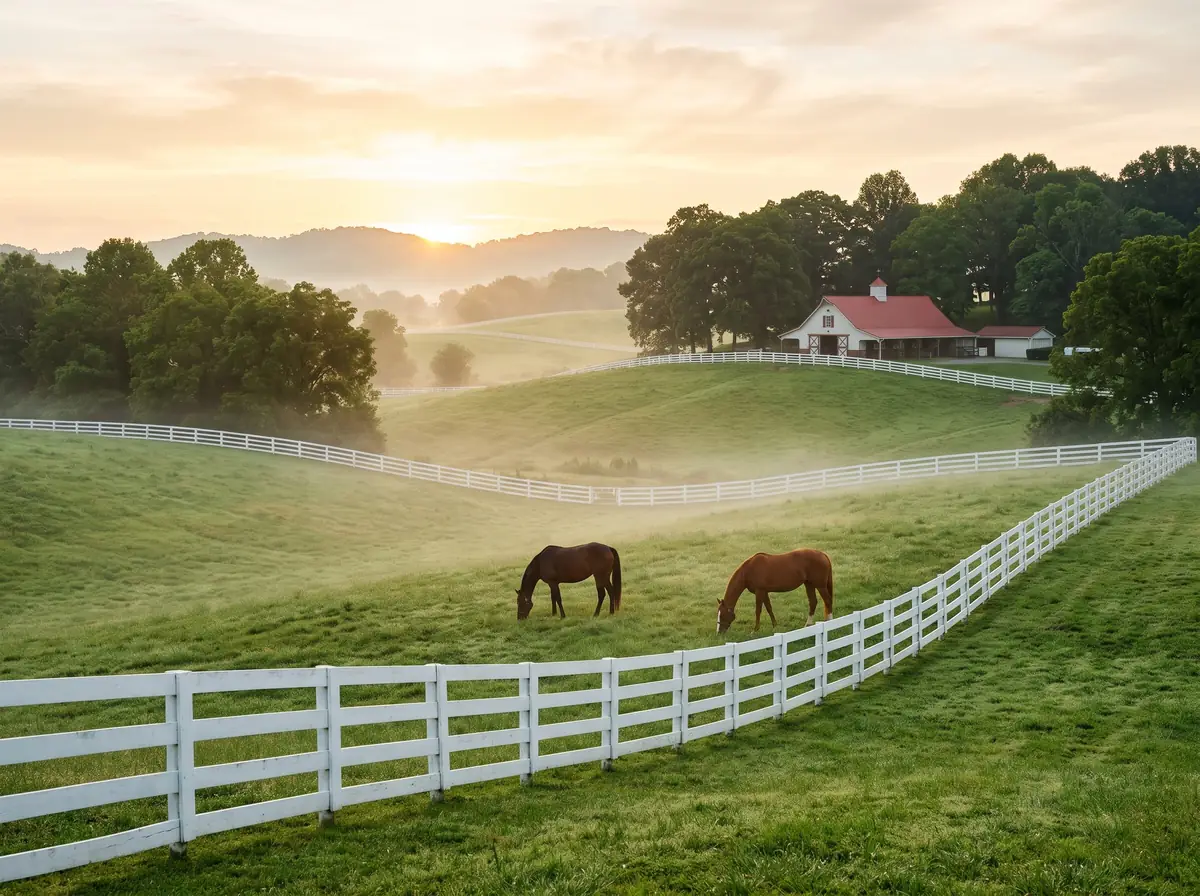
As cotton faded as a cash crop, Milton became better known for horse farms of every size, and the city now has a formal Equestrian Committee appointed by the mayor and council.
The city’s equestrian page says horse farms are woven into the fabric of the city rather than clustered in one place. A map prepared by the committee in early 2024 shows half-mile circles around horse farms scattered between neighborhoods, some with a few horses and others with a dozen or more. The page invites people to visit farms and agri-businesses and to connect with the committee. A horse-show venue in neighboring Alpharetta is the Wills Park Equestrian Center; see our guide to Alpharetta.
What parks and trails are in Milton?
Milton runs a network of city parks and preserves, led by Milton City Park and Preserve and Providence Park. The city’s parks list names walking trails at most of them.
| Park | Address | What the city lists |
|---|---|---|
| Providence Park | 13440 Providence Park Drive | 42 wooded acres overlooking Providence Lake, a fishing pier, three trails including a half-mile paved loop |
| Milton City Park and Preserve | 1785 Dinsmore Road | 137 acres; 130 are a nature preserve with a 2.5-mile loop trail; pool, tennis center and community center |
| Bell Memorial Park | 15245 Bell Park Drive | Ball fields, rectangular fields, playground, walking trails; home of the Mark Law Arboretum |
| Birmingham Park | 750 Hickory Flat Road | Walking trails |
| Mayfield Park | 1000 Mayfield Road | Picnic pavilion and walking trails |
| Freedom Park | 13000 Deerfield Parkway | Outdoor workout equipment and walking trails |
Milton City Park and Preserve was the former Milton Country Club, a golf course and club the city bought in February 2018. It was the first purchase for nature preserves or conservation land under a $25 million greenspace bond that 82.86 percent of voters approved in 2016. Its North Woods hold two lakes and border Chicken Creek, while the South Woods are hillier, with bottom-land hardwood forest on soft ground that floods. The city’s park page says the first preserve trail opened in April 2022. Providence Park has no organized recreation programs and is kept as a place to walk and fish; the city’s parks list has the full roster.
On roads, the city’s cycling page lists two annual rides that pass through the city: St. Paddy O’Pedal in March and the Georgia 400 Ride in June and July.
Where did Chicken Creek get its name?
The city says Chicken Creek was likely named for Cherokee people with the name Chicken who lived nearby. The creek runs along the border of Milton City Park and Preserve.
The city’s park page says records show five people named Chicken traded at James Dorris’s store, about 200 yards west of today’s roundabout at Crabapple Chase, Heritage Walk and Crabapple Road, between 1835 and 1838, and that it found no such sales after 1838. It places the confluence of Chicken Creek and Cooper Sandy Creek with the Little River just east of the Arnold Mill Road bridge.
What events happen in Milton each year?
One of the city’s annual events is Crabapple Fest, a street market on Crabapple Road. The city’s page lists the next one for October 9, 2027.
According to the city’s Crabapple Fest page, the market features more than 100 antique, craft and art vendors along Crabapple Road, from the roundabout at Heritage Walk to the corner of Birmingham Highway and Broadwell Road, and it runs rain or shine. The city’s annual events menu also lists Arbor Day, Earth Week, Meet the Neighbors, a Memorial Day ceremony, Carvin’ in Crabapple, a Veterans Day breakfast, Christmas in Crabapple, Touch-A-Truck and Milton Restaurant Week. The city does not give fixed dates for every event on that menu, so check its calendar for the current schedule.
How could you spend a day in Milton?
A simple day starts with a walk in one of the preserves, moves to Crabapple for lunch and browsing, and ends at a park or the arboretum.
| Part of the day | Stop | Where |
|---|---|---|
| Morning | The half-mile paved loop and fishing pier at Providence Park, or the 2.5-mile preserve loop | 13440 Providence Park Drive; 1785 Dinsmore Road |
| Midday | Lunch and a walk around Crabapple Road | Crabapple Road near 2006 Heritage Walk |
| Afternoon | The Mark Law Arboretum at Bell Memorial Park, or the trails at Birmingham Park | 15245 Bell Park Drive; 750 Hickory Flat Road |
| Season to plan around | Crabapple Fest in October | Crabapple Road |
For wider trips, see our things to do in Georgia, our guide to Buckhead, and our comparison of mountain living versus metro Atlanta.
Questions & answers
How big is Milton, Georgia?
The City of Milton says it covers more than 39 square miles.
What county is Milton in?
Milton is in Fulton County. The city formed in 2006 from unincorporated parts of north Fulton County.
How many people live in Milton?
The 2020 Census counted 41,296 people in Milton, and the Census Bureau's estimate for July 1, 2025 is 41,266.
When is Crabapple Fest?
The City of Milton's Crabapple Fest page lists the next festival for October 9, 2027, on Crabapple Road. Check the city's calendar for any change.
Where can I find school information for Milton?
See the Georgia Department of Education for school data.
Sources
- City of Milton (History of Milton), checked November 19, 2026.
- City of Milton (About Milton), checked November 19, 2026.
- City of Milton (Equestrian Community), checked November 19, 2026.
- City of Milton (Crabapple Fest), checked November 19, 2026.
- City of Milton (Milton City Park and Preserve), checked November 19, 2026.
- City of Milton (Providence Park facility page), checked November 19, 2026.
- City of Milton (Parks and Facilities), checked November 19, 2026.
- City of Milton (Economic Development), checked November 19, 2026.
- City of Milton (Urban Growth Boundaries), checked November 19, 2026.
- City of Milton (Greenspace Properties), checked November 19, 2026.
- City of Milton (Cycling in Milton), checked November 19, 2026.
- U.S. Census Bureau QuickFacts (Milton city, Georgia), checked November 19, 2026.
- New Georgia Encyclopedia (Milton County), checked November 19, 2026.
- City of Milton (Mark Law Arboretum), checked November 19, 2026.
How we made this guide: the Gold Peach Realty Editorial Team researched and drafted it with AI assistance from the sources listed above, and every fact on the page was checked against those sources on November 19, 2026. Hours, fees and event dates change, so confirm with the organizer or agency before you go. Spot something out of date? Tell us.
Homes
Homes for sale from Gold Peach Realty

$849,000 New
- 4 bd
- 4 ba
- 4,621 sq ft
- 6.15 ac
120 Bear Den RD
Dahlonega, GA 30533
Listing courtesy of Gold Peach Realty LLC

$474,000 Active
- 3 bd
- 2 ba
- 1,732 sq ft
- 3 ac
57 Ashleywood DR
Dahlonega, GA 30533
Listing courtesy of Gold Peach Realty LLC

$455,000 Active
- 2 bd
- 2 ba
- 1,644 sq ft
- 1.41 ac
40 Misty Hollow DR
Dahlonega, GA 30533
Listing courtesy of Gold Peach Realty LLC

© 2026 Georgia MLS (GAMLS)
Listing information is provided by Georgia MLS (GAMLS), the copyright holder. Information is deemed reliable but is not guaranteed.
Last updated: November 25, 2026 5:09 am EST

A Gold Peach Realty community guide. Gold Peach is published by Gold Peach Realty, a Georgia real estate brokerage. Questions about buying or selling a home in Georgia? Call us.