What Does “Gold Peach” Mean in North Georgia?
Search “Gold Peach North Georgia” and you’ll find a mix of results: a brokerage, a farm-market brand, and passing references to the region’s dual heritage. This guide sorts out where the phrase comes from and what it actually points to on the ground, whether you are researching the region’s history or weighing a possible move to the North Georgia mountains.
Interested in life in North Georgia? Gold Peach Realty works with buyers moving from metro Atlanta into Dahlonega, Gainesville, Cleveland, and the mountain towns. Call (770) 283-1223 to talk through where the right fit might be.
Where does the “gold” in Gold Peach come from?
In 1828, prospectors discovered significant gold deposits in what is now Lumpkin County. That discovery triggered the first major U.S. gold rush, a full 20 years before California’s. Dahlonega grew into a major gold-mining boomtown during the 1830s-1840s and was home to a federal branch mint from 1838 until the Civil War. The dome of the North Georgia College administration building (now University of North Georgia) is famously covered in Dahlonega-mined gold.
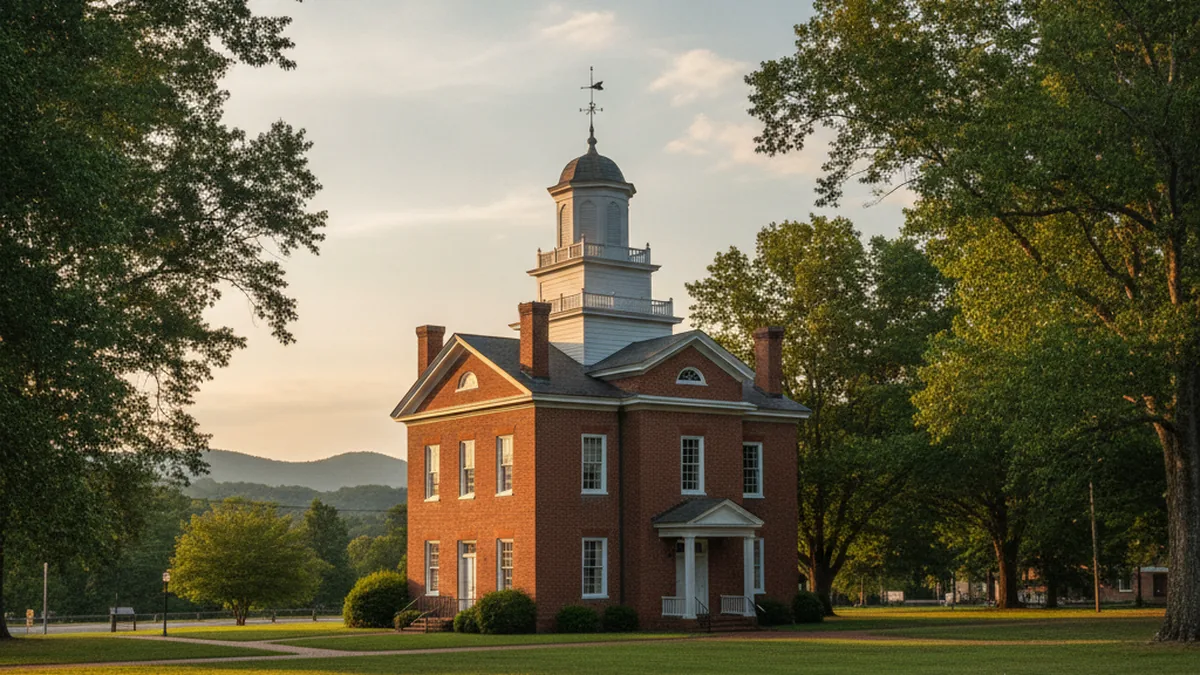
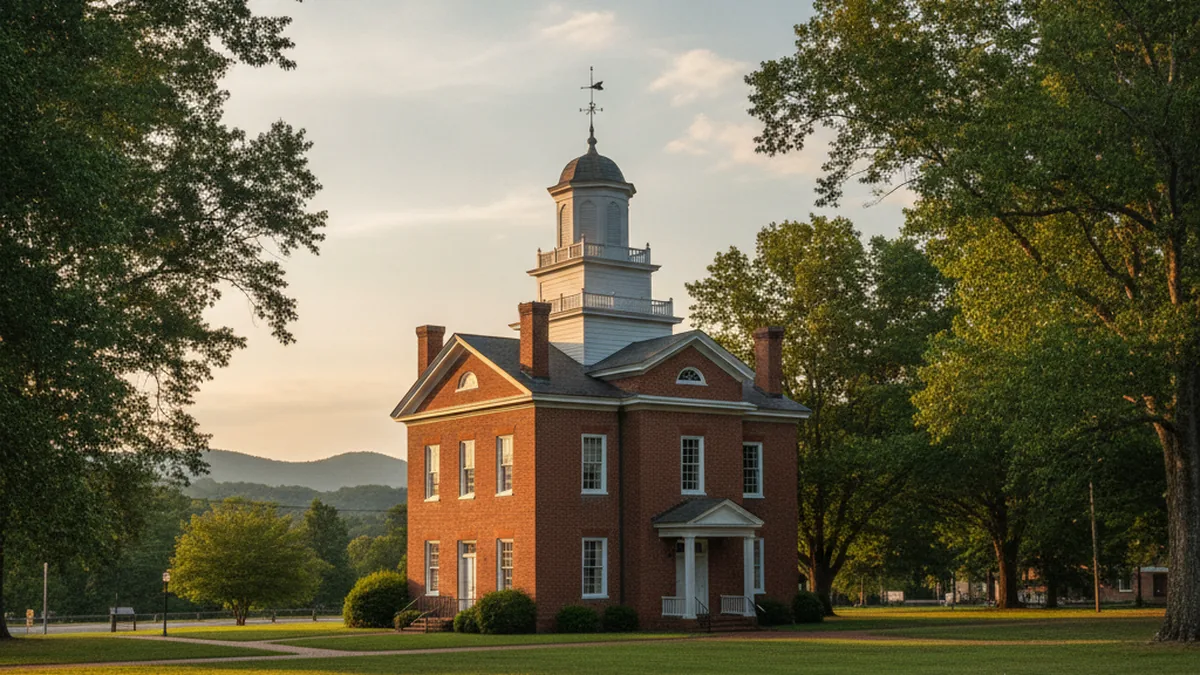
You can still visit the mines today. The Consolidated Gold Mine and Crisson Gold Mine both offer tours, panning experiences, and a working sense of what the boom looked like. The historic town square is anchored by the Dahlonega Gold Museum, which occupies the original 1836 Lumpkin County Courthouse. That building is one of the oldest surviving courthouses in Georgia.
Where does the “peach” in Gold Peach come from?
Georgia is the Peach State. While South Carolina actually produces more peaches by volume most years, Georgia’s identity has been tied to the fruit since the mid-1800s. Peach farming still shapes the middle and southern parts of the state most heavily, but North Georgia counties have their own orchard heritage. Habersham, Gilmer, and Rabun County peaches show up at roadside stands from June through August every year.
North Georgia is also the state’s apple belt (Ellijay is the apple capital of Georgia) and wine country. So “peach” in a North Georgia context is as much about the state’s broader agricultural identity as about the specific fruit.
How do gold and peaches intersect in Dahlonega?
Dahlonega is where the two traditions overlap on the ground. In town you can see:
- Gold-mining heritage at the Gold Museum and working gold mines
- The restored Chestatee River Diving Bell in Hancock Park, built for a 19th-century riverbed gold-mining attempt
- North Georgia wine country immediately north, with over a dozen wineries within 20 miles
- Seasonal roadside peach and produce stands from late spring through fall
- Historic gold-dome buildings on the UNG campus at the edge of downtown
That overlap is why “Gold Peach” reads as local shorthand. It folds two identities, mountain-country history and Southern agriculture, into a single phrase.
Which towns are considered “Gold Peach” North Georgia?
In practical terms, the North Georgia mountain and foothill region includes:
- Dahlonega, the Lumpkin County seat and the gold-rush epicenter
- Gainesville, the Hall County seat, the region’s largest city and the Lake Lanier hub
- Cleveland, the White County seat and Cabbage Patch Kids birthplace, close to Helen
- Helen, a Bavarian-themed mountain town
- Blue Ridge, the Fannin County seat and a weekend cabin destination
- Blairsville, the Union County seat, closer to Vogel State Park
- Ellijay, the Gilmer County seat, in apple country
- Clarkesville, Cornelia, Toccoa, along the Habersham/Stephens corridor
Real estate patterns differ significantly across these towns. Dahlonega prices track university proximity, Achasta and other gated communities, and wine-tourism demand. In Gainesville the drivers are lake frontage and how close a buyer needs to stay to metro Atlanta. Ellijay and Blue Ridge run largely on second-home and short-term-rental demand.
Name the town, not the region: “North Georgia” covers markets that behave very differently. Dahlonega, Gainesville, Blue Ridge and Ellijay each carry their own price patterns, commute realities and lifestyles. Narrowing to a specific town early saves months of unfocused searching.
What’s the North Georgia lifestyle like today?
For newcomers arriving from Atlanta or from out of state, daily life here differs from suburban metro living in a few concrete ways:
- Slower pace, tighter community. Small-town rhythm dominates outside Gainesville and the university-adjacent part of Dahlonega.
- More outdoor recreation. Hiking (Amicalola Falls, Springer Mountain, Blood Mountain), tubing and kayaking (Chestatee, Chattahoochee, Toccoa), fishing, and golf inside Nicklaus-designed courses like Achasta.
- Wine country. North Georgia has a working wine region. Wolf Mountain, Frogtown, Yonah Mountain, Kaya, and Cavender Creek all sit within short drives of Dahlonega.
- Seasonality. Spring peach and produce stands, summer river and lake, fall leaves and orchard harvests, winter mountain quiet.
Cost of living remains lower than metro Atlanta on most measures, though real estate prices climbed steeply after 2020 as remote-work demand pushed buyers north.
Is North Georgia a good place to move from Atlanta?
It depends what you want. If your priorities are lifestyle, outdoor access, and a slower community feel, yes: the corridor from Dahlonega through Blue Ridge is one of the best mountain-region moves in the Southeast. If your priority is commuting to a downtown Atlanta office, less so. The drive is manageable from Gainesville, but it stretches into 90+ minutes each way from Dahlonega with morning traffic.
The way to answer that for yourself is to spend real time in the towns you’re considering. Rent a cottage in Dahlonega for a weekend, then a lake house near Gainesville, then a cabin near Blue Ridge. The lifestyle differences show up quickly.
Considering a move to North Georgia? Gold Peach Realty serves Lumpkin, Hall, White, and Dawson counties. Call (770) 283-1223 or visit goldpeachrealty.com to talk through which town fits your budget and lifestyle.
Frequently asked questions
Is there still gold in Dahlonega?
Yes, in trace amounts. The commercial mining era ended in the late 1800s, but hobby panning at working tourist mines is still popular.
Are there peach orchards in North Georgia?
North Georgia is more apple country than peach country, but roadside peach stands operate seasonally throughout the region.
How far is Dahlonega from Atlanta?
Roughly 65-75 miles, or about 75-90 minutes without heavy traffic.
What’s the largest city in North Georgia?
Gainesville is the largest by population and the region’s economic hub, sitting on the north end of Lake Lanier.
Is North Georgia in the Appalachians?
Yes. The southern end of the Blue Ridge portion of the Appalachian Mountains runs through the region.
Information believed to be reliable but not guaranteed. Historical and geographic references sourced from public archives and county records. Equal Housing Opportunity. Gold Peach Realty is a licensed Georgia real estate brokerage.